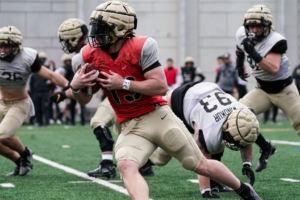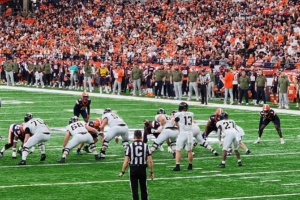
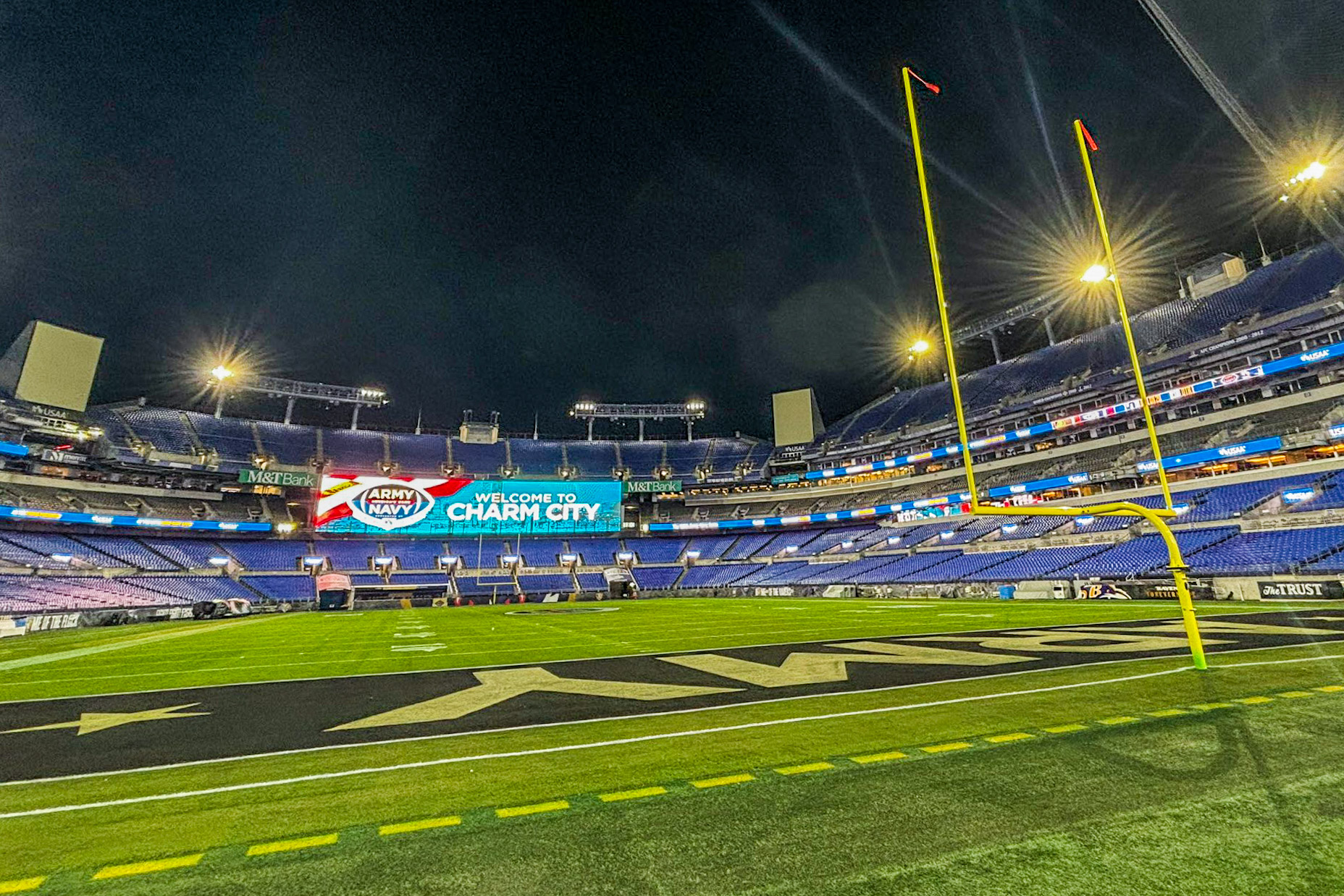

Well friends, it all comes down to this. After doing things the hard way throughout much of the year, Army finds themselves with six wins, a Fenway Bowl invitation, and a chance to secure the Commander-in-Chief Trophy this Saturday. This year’s Army-Navy Game represents just the seventh time that the trophy will be definitively awarded to the winner of the game since both teams beat Air Force by a field goal earlier this year.
This is the second time Army will face Navy Offensive Coordinator Drew Cronic and his new offense. This time, though, the Black Knight will have had an extra year of game tape and an actual bye week with which to study it in preparation for Saturday’s game.
Navy’s Offense
The Midshipmen have one of the most senior-heavy units in recent memory, returning QB Blake Horvath, RB Alex Tecza, SBs Eli Heidenreich and Brandon Chatman, and WR Nathan Kent. Top-producing TE Cody Howard also returned as a senior, but injuries have kept him off the field for all but three games this year, and he is not currently listed on the depth chart. But it’s Army-Navy, so who knows?
Of note, Horvath and Tecza have been fighting nagging injuries through much of the year. Horvath has been pulled from multiple games, to include some must-win conference affairs.
Looking for underclassmen on Navy’s offensive depth chart requires you to either look pretty hard, or just look over at the offensive line. Navy has two sophomores and a freshman listed as starters. In terms of raw production, backup running back/third string quarterback Jackson Gutierrez has made the most impact.
Your @American_Conf All-Conference Second Team!
— Navy Football (@NavyFB) December 2, 2025
Congrats Eli, Ben and Alex! #GoNavy | #RollGoats pic.twitter.com/XCbedS3zQo
Offensive Style
Whatever you thought about Navy’s offense last year, we saw a lot more of that this year. Here at AFF, we introduced a stat dividing touchdown drives into three categories: turnover, explosive, and blunt-force touchdown drives, which we abbreviated TTD, ETD, and BTD. Turnover drives obviously begin with a turnover. We sorted all other drives based on whether they averaged more or less than 10 yards per play. Historically, good to excellent option offenses split their ETDs and BTDs about evenly. Last year, though, Navy’s offense became a good bit more explosive than that, splitting all of their drives about evenly into even thirds. This year, Navy has gotten even more explosive than that, scoring half of their touchdowns via ETD with just a third coming from the old-school BTD that have been such a strong staple of Head Coach Jeff Monken’s time at Army.
The Squids have doubled down on explosive playcalling.
How has that worked? Upon initial inspection, it looks great. They scored way more points per game this year than they did last year. Looking a little closer, though, requires splitting games into good and bad performances, so we can see where common elements exist. To start, we’ll throw out VMI and Notre Dame since one of those was an FCS blowout, while the other became a blowout loss without the Mids’ starting quarterback. With this done, we find three games where the Mids performed exceptionally well — FAU, USF, and Memphis. We also have three games where they underperformed statistically — Rice, Temple, and North Texas. We’ll put the last three games — UAB, Tulsa, and Air Force — into the “other” bucket for now.
The USF game showed Navy’s gameplan work to perfection. The Squids got up by multiple scores by taking a few early risks, started grinding down the clock once they were up, and finished with enough points to win despite their defense desperately trying to give that game away. The FAU game was more of the same, but without the fourth quarter defensive issues. The Memphis game proved the anomaly. It became perhaps the Mids’ best team performance all year. That game proved a back-and-forth contest against a high-quality opponent.
Against Temple and North Texas, we see a different common theme. Navy found themselves down by multiple scores early. They never recovered from that against North Texas, and it took a few miracles for them to come back against Temple. Rice became the oddball game in this group. After the last two matchups, I’m sure the coaching staff is happy not to have Rice on their schedule next year.
In our last group, we find even more of the same theme. Navy got down multiple scores early against Tulsa and down seven early to Air Force. Once again, working from behind caused them some problems. The Mids started the game with three consecutive turnovers against the Golden Hurricane and had an early fumble against Air Force. UAB proved this group’s oddball. The Squids played a punch-for-punch game in the first half before putting it away in the second. They went on to win all of these games, but their performance inspired a lot less confidence than they maybe should have.
Here’s the key though. With the exception of the three oddball games — Memphis, Rice, and UAB — Navy’s performance has almost always varied based on whether they played with an early lead or an early deficit. Sometimes it’s a matter of how their defense is playing; often it’s a question of whether their early offensive risks pay off. When a team relies as much as the Mids do on explosive drives, game leverage can tilt quickly and cause serious problems on both sides.
“No sh*t Sherlock. Playing with a lead helps teams win? Couldn’ta thunk it!”
Fair enough. The point, though, is that Navy takes risks early, even when they don’t necessarily need to go for it all. They intentionally use their offensive style to create first quarter high-leverage spots in almost all of their games.
Sometimes this works, and they can use their gained advantage to put teams away. But sometimes those risks don’t pay off. They do it either way. Throughout the year, Navy has been willing to effectively throw drives away early for a chance to win the leverage battle in the first quarter. When that doesn’t work, though, they’ve wound up playing close games against teams that aren’t remotely as good as they are.
Navy Defense
If Navy’s defense was as good as their linebackers were last year, then they’re as good as their defensive line is this year. Despite how dominant the Mids’ offense has been this season, they didn’t land a single offensive player on the American Conference first team. They did have one on defense, though. Senior NG Landon Robinson made the cut. He’s one of just three seniors listed as defensive starters on Navy’s depth chart. He’s joined by OLBs Luke Pirris and Jaxson Campbell. Junior S Giuseppe Sessi is the lone upperclassman in the starting backfield.
Navy’s defense has left a lot to be desired this year, allowing UAB to score 24, Air Force, North Texas, and Temple all to score 31, and FAU to score 32. The Mids give up nearly 400 yards and 27 points per game, putting them at around the 33rd percentile for both stats. Their rushing defense, however, remains in the top half of the FBSs. Moreover, Army has not rushed for more than 200 yards against Navy since 2020. And there’s no reason this year looks to be any different, unless Army changes its playcalling considerably. Air Force played Navy close, but the Falcons threw 20 times and had more passing yards than rushing yards in that game. Army will also have to get creative if they want to exploit Navy’s secondary.
Landon has been named @American_Conf Defensive Player of the Year!
— Navy Football (@NavyFB) December 2, 2025
Congrats Landon!#GoNavy | #RollGoats pic.twitter.com/plIlCN8cIZ
Red Zone Scoring
This has been a critical stat heading into CiC matchup in recent years. This year, Army and Navy are so close in our AFF red zone points percentage stat, that the significance is less than half a point. If there’s anything to talk about here, it’s that all four units — both team’s offenses and defenses — rank significantly worse statistically in the red zone when compared to last year.
QB Cale Hellums ➡️ @SportsCenter 🎥
— Army Football (@ArmyWP_Football) December 10, 2025
In case you missed it last night, here’s the full segment as he and his teammates prep for the @ArmyNavyGame.#GoArmy x #BeatNavy pic.twitter.com/mtSvqpqYNg
What’s the Gameplan?
First and foremost, the Black Knights need to out-leverage Navy if they can. Despite this season’s dreadful start, Army actually has far fewer turnovers than Navy. The Air Force-Navy game could’ve gone either way, but the Falcons missed a critical field goal coming off of a Navy turnover. If Army gets that type of first-half gift, they’ll need to take risks and score a touchdown. Had Air Force done that, the score would’ve become 14-3 Falcons, and that game would have looked a lot different.
Army’s defense also can’t let bad things get worse. If Navy wants to throw underneath routes, that’s fine. But the Black Knights can’t let those quick throws turn into 20+ yard explosive plays. Especially in the first half, the Staff might consider strategic timeouts to rest their defense in the red zone. Navy has three so-called “Swiss Army Knives” in their backfield. Army’s going to have to find some way to make sure that none of them break loose.
Lastly, the Black Knights need good short yardage playcalling. They will not win this game with the type of 4th-and-1 play calling we witnessed early against UTSA. That doesn’t mean they can’t try a creative approach, but whatever they try, it will need to work better than a Quarterback Zone Run out of the shotgun on 4th and 1.
Final Thoughts
As you no doubt know by now, AFF will be on Radio Row tomorrow doing interviews and basically help you get hyped for the game. We’ll be down at the Baltimore Convention Center, and the event is supposed to be open to the public. Come down and see us! We’ve got a big opportunity this week and are very excited to be a bigger part of the game’s hype machine this year.
As of this writing, Vegas has made Navy a 6- to 6.5-point favorite. That can only help the Black Knights. They’ve played astronomically better this season as underdogs. Indeed, if the equipment staff is doing their job, each locker will have a big 6 displayed on the inside of it.
#BEATnavy! pic.twitter.com/mjvxTxQUg1
— Jeff Monken (@CoachJeffMonken) December 11, 2025
America’s Game kicks on Saturday at 3:00 PM on CBS. As always, the Varsity Network has the radio call if you’d like to sync that to your TV. Also, the best gameday chat remains exclusively in our Firstie Club.
We’ll see you there!
Go Army! BEAT NAVY!!!