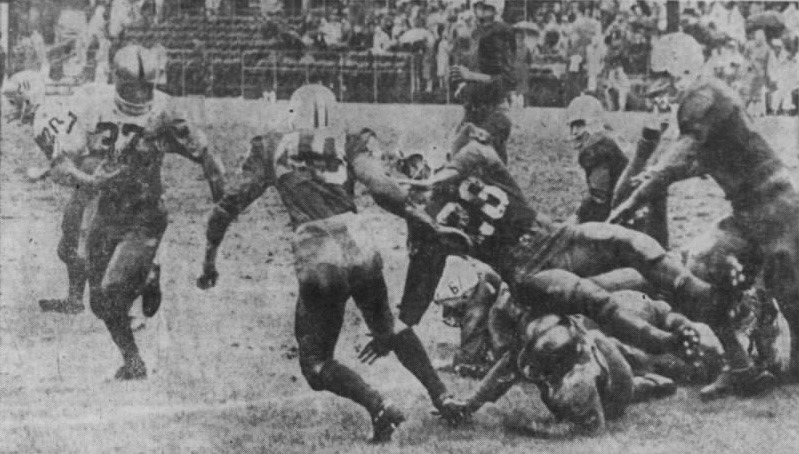


Army’s appearance in the Fenway Bowl will mark a momentous occasion. Saturday’s contest against UConn will become the football team’s first appearance at Major League Baseball’s oldest ballpark. The baseball team played at the Red Sox’s home for a game against Navy in 2018, but the football team has never played at Fenway. However, the Black Knights did play at another Major League ballpark in Boston. Well, technically.
Many sports fans may forget that the Atlanta Braves resided in Boston from 1871 to 1952 before moving to Milwaukee and then on to Atlanta. From 1915 to 1952, they called Braves Field home.
Braves Field was one of the largest ballparks in Major League Baseball during the Braves’ residence, seating around 40,000. The ballpark had its share of important moments over the years, although its green, crosstown counterpart, Fenway Park often overshadowed it.
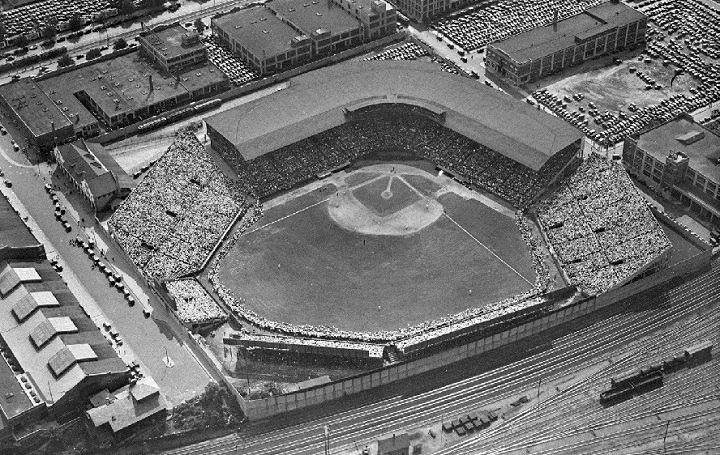
Braves Field hosted the 1936 MLB All-Star Game and three World Series: the 1914, 1916, and 1948 editions. The first two actually involved the Red Sox “hosting” World Series games due to Braves Field’s superior capacity. Numerous Hall of Famers including Warren Spahn, Eddie Mathews, and even Babe Ruth called the ballpark home.
However, once the Braves left in 1952, Boston University was the only lifeline the stadium had, with the university hosting football and baseball games there. By 1959, the University took ownership of the ballpark and demolished most of the stands, leaving just the right field stands. The pictures below courtesy of Football Archaeology show the end result, with the top picture featuring temporary grandstands when the Boston Patriots began play in 1960.
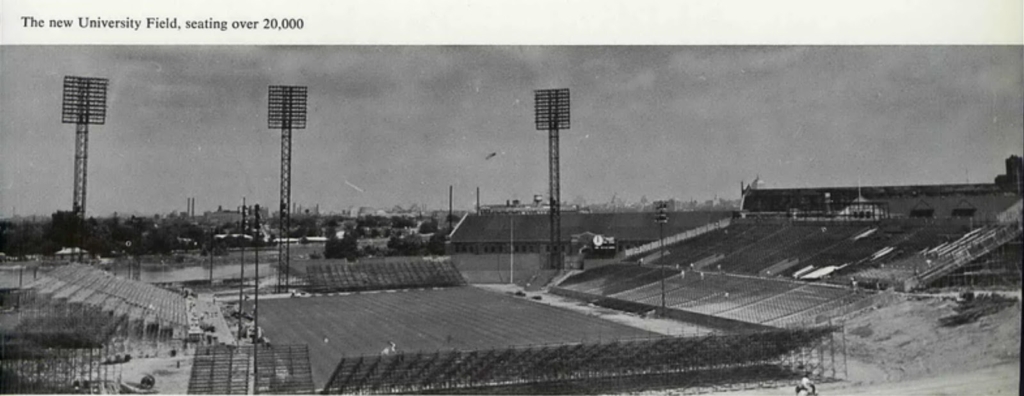
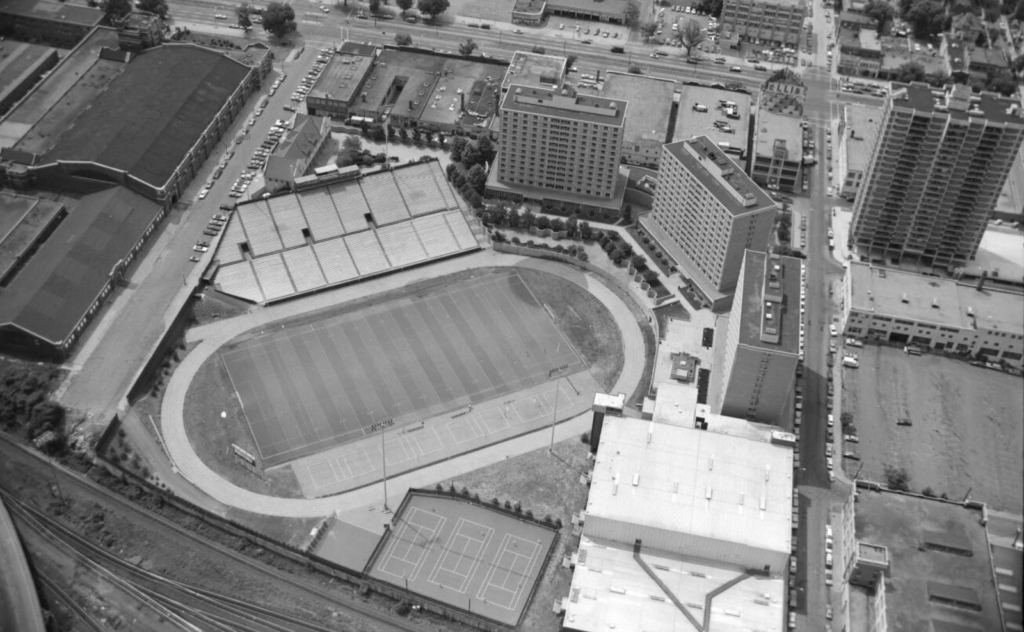
The right field stands were all that remained of the original Braves Field, now known as Nickerson Field, when Army traveled to Boston University for the first time in 1962. Army entered their November 3rd game against 1-5 Boston University with a 5-1 record and only a loss to Michigan. The Cadets’ hot start garnered them interest from the Cotton and Gator Bowls.
Nonetheless, a torrential downpour at Nickerson Field, the former Braves Field, caused Army to struggle more than originally anticipated. The Cadets could only muster 165 yards of offense, none through the air, while Boston University outgained them by two yards.
Fortunately, Army turned three fumbles, a blocked kick and a long punt return into 26 points in a 26-0 win over the upset-minded Terriers. Fullback Ray Paske ran for two scores, while Bob Wright ran for another touchdown. Ken Waldrop’s 49-yard punt return set up Wright’s one-yard touchdown to give Army its first touchdown of the day and a 10-0 lead. Waldrop remains a forgotten playmaker for Army. His 431 career punt return yards are third in program history, while his 14-yard average is fourth all-time.
Dick Heydt kicked a pair of field goals from 27 and 36 yards out to cap the scoring. Heydt would finish his career with 13 field goals made, somehow still good for 14th in program history.
This was as good as it got for Army in 1962. Losses to 2-5 Oklahoma State and 4-4 Pitt in the subsequent weeks eviscerated any chance of a bowl Army had. Navy then concluded Army’s freefall with a 34-14 win over the Cadets. Roger Staubach completed 10 of his 12 passes for 204 yards and four total touchdowns in a game largely credited with launching his 1963 Heisman Trophy campaign.
The most interesting aspect of all of this is Army fans can still enjoy a game at what is left of the former Braves Field. Boston University’s men’s and women’s soccer and lacrosse programs still play at Nickerson Field, hosting Army once per year in both sports. The comparison below shows that Nickerson Field still has some semblance to its Major League Baseball roots with those right field bleachers still remaining.

Although the conditions may not be as sloppy as that November 1962 day, the Black Knights hope for the same luck and a different close to the season than that year’s team. Between this one-time excursion to the former Braves Field and Army’s famed games at Yankee Stadium, this week’s Fenway Bowl is another chapter in Army football’s intriguing history on the diamond.
For more on Braves Field check out the link pieces from the Society for American Baseball Research and Football Archaeology. And of course, huge thanks to the 2025 Army Football Media Guide.