

Saturday’s game against South Florida may seem like just another American Conference game, but it represents a rarity for Army. The Bulls’ visit to West Point this weekend will be just the second fifth by a Florida team in 102 years. This increased contact with the Sunshine State represents a changing landscape to which the Black Knights must adapt.
Before joining the American, Army had not played a team from Florida since 2004, when it was a member of Conference USA. Moreover, the Black Knights’ two C-USA games against USF were the program’s first against a team from Florida since 1978.
Next stop: West Point. pic.twitter.com/a68UltCoga
— South Florida Football (@USFFootball) September 7, 2026
Army is now playing schools via the American Conference that would never have played as an independent. Strangely enough, though, the visit from USF represents a throwback to a much different landscape. Aside from the visit from then-conference-mate USF back in 2003, the Florida Gators — and the Miami Hurricanes — are the only other programs from Florida to visit West Point — ever. The Gators were first, visiting way back in 1923 and 1924, seeking respect and notoriety.
Friends, it seems unbelievable now, but the Northeast was once the epicenter of the college football universe. College football’s modern ruleset formed as we know it today on the fields of the Ivy League in the late 1800s. Army, Harvard, Yale, and Princeton competed for national titles with the New York Times covering the chase as the country’s sportsmedia flagbearer. There was only one way to earn respect and attention in the college football world for much of the early 20th century — beat one of the Northeast’s power schools.
Throughout the 1920s, Army hosted many schools seeking entry into the college football elite. Current Power Four schools such as Kansas and Auburn as well as tiny midwestern private colleges like Wabash, DePauw, and Carleton all visited West Point, searching for glory. The Florida Gators made their 1920’s-era trips to West Point in this context, too.
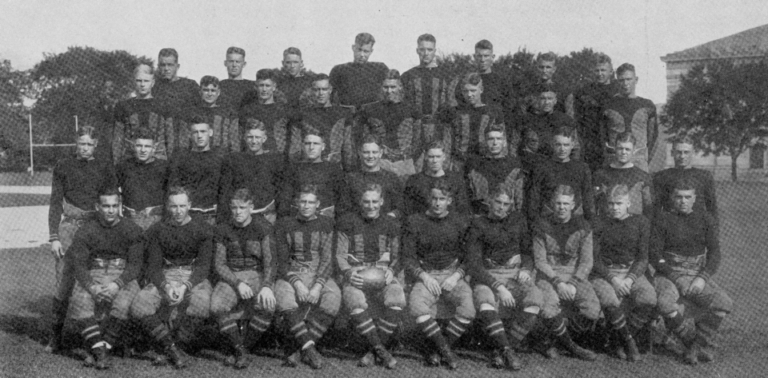
Florida was a relative unknown to the college football world in 1923, having only started its program in 1906. Despite finishing 7-2 in 1922, no one expected Florida to compete in the 1923 season opener against Army. The Black Knights finished 8-0-2 the previous year, allowing just 21 points over the course of the entire season. Ties to mighty Yale and Notre Dame were the lone blemishes to the Black Knights’ resume. Furthermore, the 1923 Cadets featured two All-Americans in Edgar Garbisch, a future College Football Hall of Famer, and Gus Farwick, who would later play in the first-ever East-West Shrine Game.
Surprisingly, Florida caught the attention of the Northeast media by playing Army to a scoreless first half tie. Two missed field goals by Garbisch gave the Gators hope, at least until they collapsed in the second half. William Wood then scored two touchdowns, while FB “Tiny” Hewitt had a 35-yard run that set up the final score by QB George Smythe to help Army “escape” with a 20-0 win.
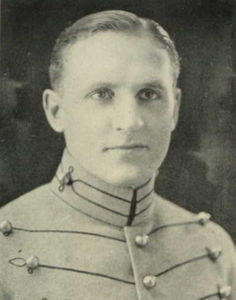
The Gators returned the next year and gave the Cadets an even greater scare. Amazingly, the 1924 Army team may have been even better than the 1923 edition. Farwick and Garbisch returned, while ends Frank Frazer and Harry Ellinger earned third-team All-American nods from various publications. However, future College Football Hall of Famer Harry “Lighthorse” Wilson became the real star. Wilson remains one of the most gifted athletes in West Point history, earning 12 letters and All-American honors in football, baseball, and lacrosse. Walter Camp once said, “Wilson on his good days has no peer,” while even Time Magazine covered his athletic exploits, proving both Wilson’s notoriety and the hold college football had on the national consciousness.
Nonetheless, this Florida Gators team again gave Army fits. After a goal line stand early in the fourth quarter, Wilson broke a 7-7 tie with a dazzling 45-yard run. William Wood’s lengthy punts then helped to preserve Army’s 14-7 lead, allowing the Black Knights of the Hudson to once again escape the Gators. Despite losing both meetings at West Point, Florida had earned respect from both matchups. Army would not play another school from Florida until 1971.
Necessity amid a difficult landscape for college football independents alongside conference realignment has forced Army into scheduling more Florida schools. Moreover, Army now recruits Florida heavily, reflecting how the sport’s center of gravity has shifted south. The Sunshine State isn’t just sending teams to Michie; it’s sending future Black Knights as well. Still, arguably Florida’s most storied program and one of college football’s most well-known brands visited the U.S. Military Academy 102 years ago as a way to put the state into college football’s national conversation. Now, over a century later, USF seeks to solidify its place among the American Conference’s elite with this next visit to West Point.
The more things change, the more they stay the same, I guess.
Go Army! Beat USF!!!