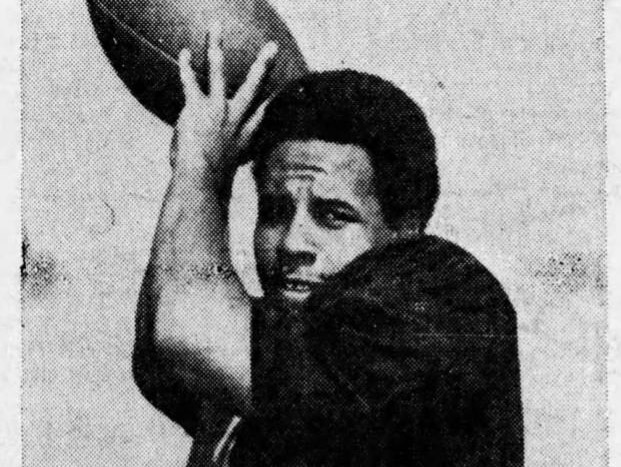

Army’s 23-3 win over Air Force in 2023 was a momentous occasion in more ways than one. Not only did Army beat its first AP-ranked foe in 51 years, but DB Jabari Moore broke Greg McGlasker’s program record for career games played after appearing in his 55th contest.
The post game notes brought McGlasker back into the limelight 46 years after he played his final game for Army. However, his games-played streak was not even close to his most important milestone.
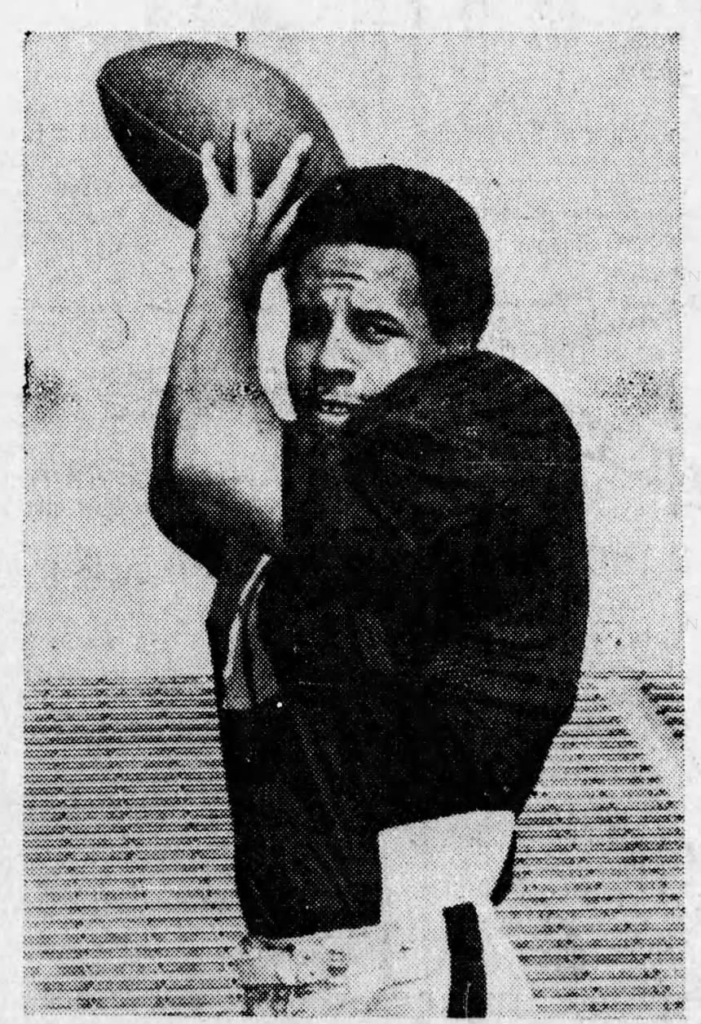
McGlasker was Army’s first African American quarterback ever in 1974.
Today, we do not even think twice when we see a Black quarterback in college or in the NFL. After all, half of the 32 NFL teams had African American starters on opening day this past season. However, it was not always this way. Not even close.
Black Quarterbacks were still a novelty and a liability to many when Greg McGlasker battled Scott Gillogly for Army’s quarterback job back in 1974. Coaches and scouts wrongly questioned whether Black players had the intelligence to play the position.
Many aspiring African American quarterbacks had to change positions. McGlasker found himself competing for Army’s starting quarterback job six years after Marlin Briscoe became the first African American starting quarterback in the NFL and four years before NFL teams told Warren Moon of all people to change positions.
McGlasker was never supposed to be Army’s quarterback. Although he played the position in high school, McGlasker played running back in his 1973 plebe year. He ran for 94 yards and actually finished fourth on the team in rushing yards. McGlasker threw six passes and completed two for 37 yards, but those came on halfback passes.
Then 1974 came. Army’s then all-time leading passer Kingsley Fink graduated and new Head Coach Homer Smith installed the wishbone. McGlasker and converted safety Scott Gillogly were the only quarterbacks equipped to run the offense. The two competed in a hotly contested quarterback race, with Gillogly ultimately earning the starting nod. McGlasker still saw the field and made history that year.
McGlasker saw playing time throughout the 1974 season and started three games under center. He took over for Gillogly before the Notre Dame game and proceeded to start the next three games. Unfortunately, the results proved suboptimal.
McGlasker carried the ball eleven times for negative thirteen yards and completed just one of his eight passes for eight yards against Notre Dame. Alas, Gillogly misfired on all six of his passes to give Army a putrid 1/14 passing line on the day. The Cadets mustered just 89 yards of offense and six first downs in a 48-0 loss to the Fighting Irish.
Thankfully, McGlasker fared much better the following week against Holy Cross. He ran for 65 yards on 23 carries while completing two of his five passes for 18 yards. Unfortunately, his tough running did not translate into points. Coach Smith benched McGlasker with Army down 7-3 late in the third quarter. Gillogly rallied Army to a 13-10 win over the Crusaders.
Nonetheless, Smith gave McGlasker one more chance to start the following week against Vanderbilt. This went to no avail. Army fell behind 38-6 to the Commodores, only scoring on a kickoff return. Smith benched McGlasker for a young Leamon Hall, who led the Cadets to their other touchdown in what finished as a 38-14 loss.
This ended McGlasker’s time at quarterback, but not his contributions. McGlasker may be Army’s most versatile player ever. After ending the 1974 season with six completions in 20 passes for 74 yards and 39 yards on 45 rushes, he switched to receiver the next season.
McGlasker stayed at receiver until the end of his career, catching 27 passes for 339 yards. He caught touchdowns in Army’s 54-32 win over Lehigh in 1976 and the Cadets’ dramatic come-from-behind 34-32 win over Villanova in 1977. He also returned three punts for 11 yards that same year.
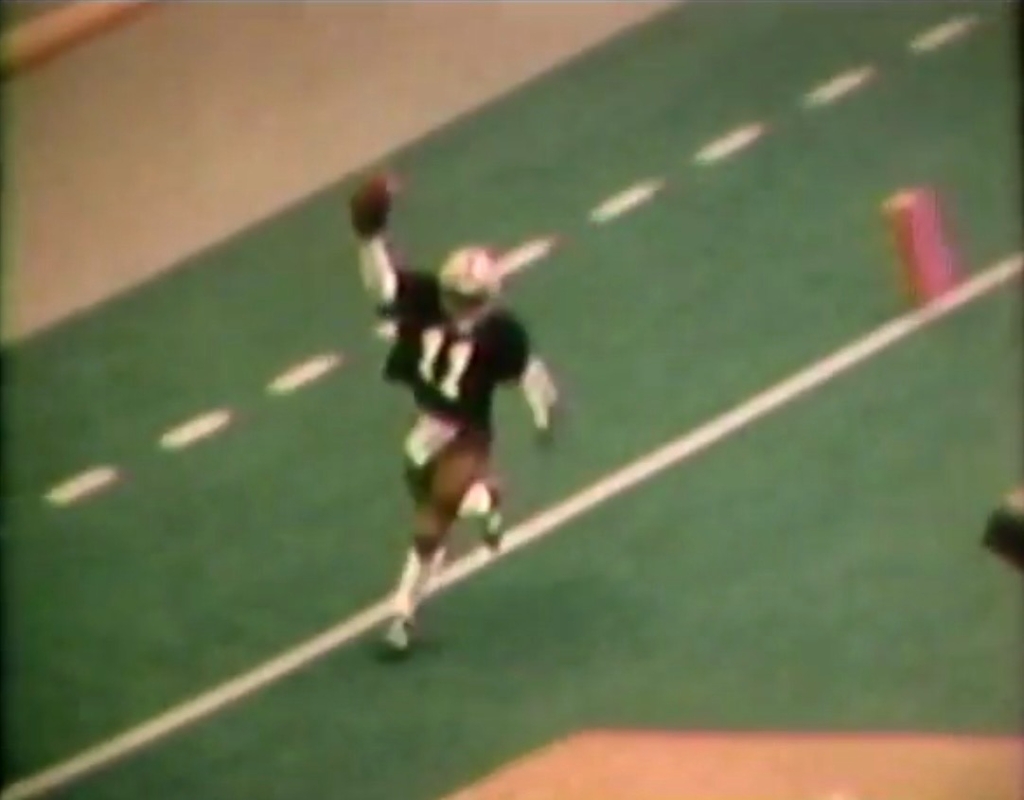
McGlasker after catching a touchdown against Villanova in 1977.
As if that weren’t enough, he was also the holder on field goals in 1977. McGlasker was going to find a way to stay on the field whether he was a quarterback or not.
Many Army fans forget about McGlasker today, but he may be one of the program’s most unsung heroes. Aside from holding on every kick of the 1977 season, including the winning points in that year’s Army-Navy Game, McGlasker became a trailblazer in every sense of the word. It is difficult to imagine Army’s success at the quarterback position throughout the eighties without McGlasker’s contributions. Tory Crawford and Bryan McWilliams were both integral pieces to Army’s 1985 Peach Bowl and 1988 Sun Bowl teams.
Greg McGlasker may not have had gaudy stats like other Army quarterbacks, but his 1974 season set an important foundation for Army’s other Black quarterbacks in the coming decades.
For more on the plight of African American quarterbacks, read William C. Rhodes’s book Third and a Mile: From Fritz Pollard to Michael Vick–an Oral History of the Trials, Tears and Triumphs of the Black Quarterback. Mike Belter’s (Class of 1978) book Operation Black September: The 1977 Army Football Team also guided my research efforts.